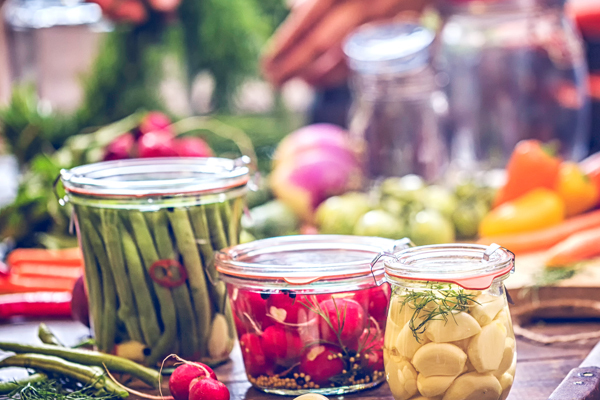
Fermented foods can bring a number of health benefits when consumed regularly. Fermentation is the process of using yeast or bacteria to turn carbohydrates into alcohol or organic acids. Fermented foods give your body the probiotics it needs to maintain a healthy and balanced gut microbiome.
Essentially, the bacteria in fermented foods help to reduce the risk of health problems due to imbalanced gut bacteria. You can make some fermented foods at home, such as:
Yogurt
Yogurt contains many important nutrients, such as calcium, potassium, riboflavin, and vitamin B12.
Making your own yogurt is extremely easy. All you need is a little bit of pre-made yogurt and some milk. For a quart of homemade yogurt, all you need is a quart-sized jar, ¼ cup of plain yogurt, and 1 quart of milk.
Kombucha
Kombucha is a good source of probiotics, beneficial enzymes, antioxidants, vitamins, and minerals.
To make kombucha, all you need is water, caffeinated tea (black or green), sugar (or another sweetener), a SCOBY, and some time. SCOBY is an acronym for “symbiotic culture of bacteria and yeast.” People will also often refer to this as “the mother.” A SCOBY can either be purchased or made at home.
Sourdough Bread
While sourdough is still bread and should be consumed in moderation, it has numerous health benefits. Sourdough is rich in vitamins and nutrients — such as iron, magnesium, vitamin E, and calcium.
To make your own sourdough bread you need to make a sourdough starter. Once you have your starter, you can begin making your own bread. You can even experiment with something fun like sourdough pancakes!
Sauerkraut
Like many fermented foods, sauerkraut offers many health benefits — way more than fresh cabbage! Sauerkraut can help to boost your immune system and offers a great source of fiber and probiotics.
For super simple and basic sauerkraut, all you need is cabbage, salt, and a container to put it in. This fail-proof fermented food is extremely easy to make and offers incredible nutritional benefits.
Wrapping Up
Fermented foods provide a number of health benefits. From probiotics to vitamins and nutrients, these foods are a great way to bring healthy bacteria into your gut. Whether you’re looking for a high-maintenance option — like sourdough — or a super quick and easy one, there are plenty of options out there.
We hope that you try out one (or more!) of these homemade fermented foods and help out your hardworking gut microbiome!
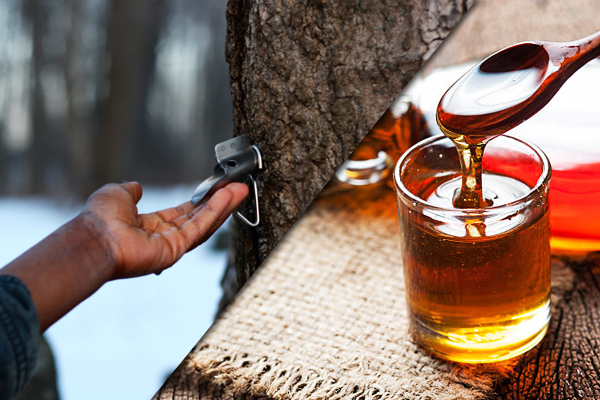
You may wonder what makes real maps syrup real. Real maple syrup comes from a maple tree. While maple trees don’t exactly produce maple syrup, they do produce the sap that we turn into maple syrup.
The “maple syrup” that many Americans put on pancakes isn’t actually real maple syrup. Most of the maple syrup that you find at the supermarket (like Aunt Jemima and Log Cabin) is essentially maple-flavored sugar.
In short, real maple syrup is concentrated maple sap with no other ingredients, whereas artificial maple syrups are corn syrup with maple flavoring.
The Syrup Season
The season for maple syrup is actually very short. It begins as winter is coming to an end — often in late February or early March — and only lasts for about 4-6 weeks. There is no set time for when the harvesting should begin. Sugarmakers will look for signs that spring is coming to determine when to be
Sugarmakers will prepare for the annual maple sap harvest by setting up their buckets or sap tubing systems to gather the sap. Before any harvesting can begin, all equipment must be perfectly clean and in good condition.
How Is Maple Syrup Made?
The first step in making maple syrup is tapping the maple trees. This means drilling a hole into the trunk of the tree so that the sap can be collected. During the 4-6 weeks of the syrup-making season about 10 gallons of sap will be collected from each tree. This is a very small portion of their total amount of sap and does not hurt the tree.
There are two common methods for gathering sap from the trees: the bucket method and the tubing method. For the bucket method, sugarmakers will hang the bucket on the tree so that it can collect the sap coming out of the tap. It is more common today for sugarmakers to use the tubing method. This method uses plastic tubes to collect the sap in one centralized location. Once collected, the sap must be evaporated as quickly as possible. The fresher the sap the better the quality of the syrup. The collected sap is evaporated in a sugarhouse with large, flat pans. Sugarmakers use wood, gas, or electricity to heat the sap until it turns a deep golden color and reaches 7.5 degrees over the boiling point of water. This evaporation process is what turns maple sap into maple syrup. It takes about 40 gallons of maple sap to make a single gallon of maple syrup. The water content goes from 98% (with only 2% sugar as sap) to only 33% (with 67% sugar) when it becomes syrup.
Wrapping Up
The process of making real maple syrup from maple sap is quite hands-on. Additionally, the short syrup-making season directly affects how much syrup gets made each year.
The intensive process and quantity of real maple syrup each year leads to a more expensive syrup. For some people, this can be the deciding factor in what type of syrup they get. But for some people, the deciding factor is the taste. Many people actually prefer artificial maple syrup over real maple syrup — especially in the U.S.
Whether you‘re a fan of real maple syrup or artificial maple syrup, we hope that this article helped you learn about how maple syrup is made!
As the prices of gas and groceries rise, there is more concern about hyperinflation. Inflation is considered normal in today’s private central bank economy. It is important to know how inflation affects our economy, the risks of hyperinflation, and how to best prepare for hyperinflation.
What is Hyperinflation?
They say inflation refers to the rising price of goods and services over time. I’ll unpack a little more in just a moment; first… They say the cost of goods and services in the US has risen about 2% every year.
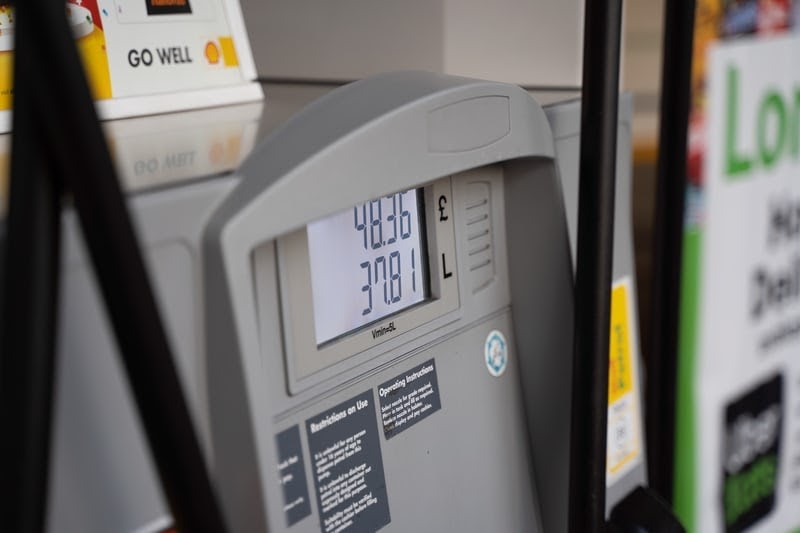
Of course, you and I know these are manipulated numbers when the cost of food is increasing every time you go to the store… and gas prices have increased over $1 per gallon in the past 12 months.
There are conflicting definitions on the definition of hyperinflation. For this post, we’re talking about extreme inflation with prices rising at a very high rate in a very short time.
We are also coming from the position that the cause of inflation is NOT rising prices… it’s an inflated currency supply. When the amount of currency in circulation increases, the value of each dollar decreases.
It’s like pie.
It doesn’t matter if it’s apple, cream, or pizza pie… If there’s a whole pie, and you love pie… well… that’s a good thing. If, however, there is only one piece of pie left, the value of that slice is high. Especially if someone else wants it.
When there is a small supply, the pie is worth more than when there’s an abundance of pie. When there is a small supply of currency, each piece is worth more than when there’s an inflated amount of currency.
Now I’m hungry… and speaking of hunger…
Hyperinflation happens in severe economic depressions or turmoil. It often looks like high unemployment rates, a multitude of bankruptcies, and less economic productivity. When an economy faces a depression, the central bank increases its money supply. The economy then needs to grow with this supply. If they don’t, the cost of creating and selling products and services increases.
Do I need to Prepare?
There are many speculations on if hyperinflation has already started. Hyperinflation is rare. Let’s say you prepare for hyperinflation, and it doesn’t happen. Well, there’s no harm done, and you’re farther ahead than you might have otherwise been. And if it does happen, you will be ready.
At the end of the day, you can’t lose by being prepared.
Ways to Prepare for Hyperinflation
Get self-sufficient now.
During hyperinflation, you might expect food and energy shortages, so act quickly. You must store food, water, gasoline, medication, and supplies for your home. Reduce your reliance on energy by purchasing solar-powered products like manual washers, solar lamps, and solar cookers.
Food Plan
Stock up on food and home items. This will save you money when prices rise. Food prices rise with hyperinflation. Invest in vinegar, bleach, and baking soda. They can be used for many purposes.
Grow Your Own Food
Grow a little more food every day. It takes a long time to build soil and skills for a stable, abundant harvest. A good place to start is by growing tomatoes, or peppers in a pot or microgreens in a tray.
Water
Consider long-term food and water supplies. You’ll need to cultivate, plant fruit trees, and buy land with natural water sources. You can’t exist without food and water. These should be your first steps.
Security and Protection
Empty store shelves, inadequate resources, and overworked police are common challenges in places where hyperinflation is common. It’s only logical to be able to protect your home and family.
Gold & Silver
Visit a coin shop to learn about buying gold and silver. You can make foolish decisions in a panic, and now is not the time to invest in the unknown. As the dollar loses value, precious metals gain value. People who had money in the bank before the collapse wish they had bought gold instead. Here you can learn about precious metals in general.
Medical Preparations
Are you on long-term prescription medication? Your doctor may be able to help you store additional medicine. If you have health insurance, it usually restarts after 25 days. Take advantage of the 5-day buffer and restock as soon as you can. Your doctor may also give you modest doses of medication to help you stock up.
Do you regularly take over-the-counter medicationsPrepare pain relievers, allergy pills, cold and flu cures, or any other medicines you and your family may need. Also, keep enough vitamins on hand.
Prepare to treat minor injuries yourself. Keep a well-stocked first aid kit on hand. Get betadine, nasal spray/rinse (can use diluted betadine water solution to kill viruses), isopropyl alcohol. Quercetin, Vitamin C, Vitamin D, Zinc, Cinchona Bark
Put your health first. Exercise daily and maintain good nutrition. Get adequate rest, sun, and air. Keep up with your medical and dental appointments, and other healthy habits.
Learn how to make money as a family. We all should be able to earn extra money. I’ve mentioned it here and here. It’s better to establish a joint venture. a mother helped her kids create a company at their local farmer’s market
Pay Off Debt
Pay off any variable-rate debt as soon as feasible. Unsecured credit card debt, in particular, could see interest rates climb, further reducing a family’s ability to meet basic demands.
Refinance
Consider refinancing your mortgage while rates are at historic lows. If you already have a low mortgage rate that won’t change, pay off variable-rate debt first.
Transportation
Consider strategies to save on transportation. If gas prices skyrocket, you’ll be glad to have a job close by. Save money on petrol, repairs, and insurance by getting rid of a second or third automobile. Make wise car purchases, sales, and purchases.
Buy pre-owned
If you can, avoid buying new stuff. You can find anything you need on Craiglist or eBay. Shops and garage sales also have items. Refuse to pay full price and put the savings elsewhere.
Appliance contingencies
Plan each key appliance in your home with your family. Do you have enough old-fashioned dish-drainers to use if power prices skyrocket? These strategies can help you “off-grid” in the city.
Cook at Home
If you don’t eat out often, it’s simple to save money and learn to cook more at home. This is vital if you ever need to use your food storage.
Passports
Everyone in your family should have a passport as a precaution in case you need to leave the nation. Because hyperinflation hinders the government’s ability to function, this document isn’t available from local government offices.
Breathe
Keep calm. We realize that family, friends, and a good outlook are vital. Experts claim this is the greatest way to survive. If you want to improve, start now!
Wrapping Up
These tips can help you handle the current effects of inflation. They can also help ease your worries of hyperinflation. News on hyperinflation can cause anxiety. Remember that we won’t need to be reliant on nonperishable foods tomorrow. Stay calm, and take these small steps to better handle inflation.
Even basic tools can help you support your family in a bad economy. They will be invaluable in a period of hyperinflation. The best time to collect tools is right now while they are available and affordable.
Below is a list of ideas on which tools you and your family and friends should have on hand in case things take a turn for the worst.
Kitchen Tools
Kitchen tools are essential when making your own food from scratch. Make sure you have can openers to open food cans.
If you keep wheat or other grains, a decent grain grinder is essential. It can also grind corn or beans. Learn how to grind your own flour. A grain mill can grind both corn and beans into flour.
There are inexpensive hand grinder that can grind coarse flour quickly. Inexpensive hand grinder can easily wear out, so buy the best grinder you can afford.
Here are other essential tools you may need in the kitchen.
Propane stove
Woodstove
Solar oven
Dutch oven
Measuring cups
Quality knives
Large glass containers for fermentation
Propane, solar and/or tankless water heater
Propane refrigerator
Eco-friendly dishwasher
Solar shower
Hand-powered clothes washing machine
Smoker
Dehydrator
Canning jars and lids
Meat grinder
Grain mill
Cast iron cookware
Chimney brushes
Off-grid internet options
Washing basins
Gardening tools
Without the correct tools, gardening is a lot more work. Don’t buy cheap garden tools. They break, wear out, or don’t perform like you will need them to. Invest in durable tools that can withstand abuse. Keep them out of the sun, rain, and snow… and they will be around for years to come.
Get your hands on various shovels, pruners, rakes, and… Work gloves galore! Other essential tools include…
Wheelbarrow
Pruning shears
Hoe
Pickaxe
Pitchfork
Tiller
Watering cans
Mower
Power blower
Hoses
Irrigation supplies
Feed pans
Water troughs
Fencing
Post hole digger
Fence post driver
T-posts
Compost bins
Hayfork
Storage bins
Wagon/trailer
Handyman Tools
In general, these are the tools that most handymen need.
You may have to work on your car or home frequently, so you’ll need many common tools. Some of which include drills, bits, and screwdrivers. Maintain a supply of spare tools and blades to get any job done.
Here are some additional essential tools
Hand tools
Electric tools
Saws
Axes
Felling wedge
Tool sharpeners
Hard hat
Safety glasses
Work Gloves
Work Boots
Work clothing
Ladder
Power Equipment
During an economic downturn, anything can happen. Heck… look at California when the economy is booming. And then… remember Texas in the Winter of 2021? All forms of energy and power equipment have their strengths and weaknesses. That’s why it’s important to have a mix of everything.
Here are some ideas.
Solar panels and mounts
Solar charge controllers
Deep cycle lead-acid batteries
Lithium-ion cells (learn how to build your own Powerwall)
AC to DC power inverter
Solar generator
Gas generators
Wind turbines
Build your own hydroelectric power station
Extension cords
Fuel containers
Essential Tools for Water Collection and Storage
Just like the power going out, the water can go out, too. Here are some ideas to ensure you have plenty of clean, drinkable water on hand.
Water storage tanks
Above/below ground PVC water tanks
PVC Piping, tees, valves, and other fittings
PVC cement
Learn how to incorporate a first flush diverter
Wire mesh/leaf screens
Mounting hardware
Water filtration and purification systems
Electric/manual hand pump
Submersible pump
Buckets
Tarps/plastic sheeting
Other Essential Tools You Haven’t Thought About
Sometimes you need the right tool for the job. That’s why we’ll close this one out with a list of other tools you might not have thought about… starting with a Sillcock Key.
If you live in an urban environment, a 4-Way Sillcock Key might be just the tool you need to access water in an emergency situation. Have you ever seen those special faucets without handles on the side of a convenience store or gas station, or other commercial building?
It’s known as a keyed sillcock hydrant.
They are everywhere in the suburban and urban environment. These special hydrants are used by building maintenance people for connecting water hoses for washing sidewalks, etc.
Whether the business is open or not, the sillck hydrant is sure to have water. Even with the power down, there’s probably going to be some pressure left, which allows you to get some hydration. Without a sillcock key, it’s going to be even harder to get water if you’re in a jam.
Duct tape
Gaffers Tape
Sewing and Repair Kit
Paracord
Batteries
Flashlights
Emergency radio
Generators
Head lamps
Candles
Matches
Lighters
Bungee cords
Buckets
Spotlights
Rope
Welding equipment
Staple gun
Tow chains
Ratchet and lashing straps
Sewing machine
If you start collecting the tools on this page, you will be ahead of the game should the economy take a nosedive. Simple tools can help support you and your family in rough times. Take advantage of the time you have now to collect tools while they are available and affordable.
And… if the economy turns up you’ll be ahead of the game anyway.
A new year means new opportunities. With this feeling of a fresh restart in the air, you want to make the most of the upcoming year.
Knowing where to start on this journey to being your best self may be a bit unclear. We created this post to offer some tips on looking and feeling your best.
Manage Stress
Managing stress ensures that our minds and bodies can perform at their best. Smartwatches and other devices have apps that can help you track stress levels, if you are tech savvy. You can also keep a journal where you record your mental and physical reactions to stress. This is a more traditional approach, but both are effective.
When you can identify your stressful responses, you can take steps to handle them. You can spend time in nature, exercise or meditate to help relieve stress.
Make Better Sleeping Habits
Smart watches, headbands and other devices can also help you adjust your sleep. Some people use essential oils to help them sleep. Turning off electronic devices earlier before getting ready for bed also helps. Setting consistent routines is also important to help improve your sleep habits.
Establish New Eating Habits
The American Heart Association recently released new diet guidelines. Following their suggestions can help you make proper eating choices. Heart disease is a very common issue, so taking care of your heart health with a proper diet is important.
Maintain an Exercise Routine
A little bit of physical activity everyday goes a long way for your health. Start slow if necessary, and understand your limits. Starting with a manageable exercise goal can help you stay on track with a long term commitment.
Stay up to date with your Health
Check vital signs like blood pressure, pulse, weight, and others. They help you understand how well you are taking care of your health. Attend your annual physical and other doctors’ appointments. They can help you understand what to change or maintain with your lifestyle.
Conclusion
If you want to improve your wellbeing, it is important to be mindful of where you are and think about where you want to be. Envision how you want to look and how you want to feel in the next year, and you can develop a plan for what you need to get there.
Everybody’s heard “reduce, reuse, recycle”. You don’t have to subscribe to the ‘Global Warming’ or ‘Climate Change’ narrative to be concerned about the environment, wasting money, and wasting space. When you reuse old items, it is the easiest way to make an impact at home. Plus, you save space, time, and money. Here are 3 incredible ways to reuse old items.
Reuse Old Jugs Or Cartons As Planters
Old jugs and cartons can make great planters to start a garden, or start plants to add to the garden. The great thing is that size doesn’t matter here. Simply rinse out and cut used jugs or cartons in half, and poke drainage holes in the bottom with a knife or pen. Fill them with dirt, and start growing! Smaller cartons can be used to incubate seeds and grow sprouts. Larger jugs and cartons can be used to grow larger plants.
Use Clay Scraps or Broken Pots as Plant Markers
Terra-cotta pots have an unfortunate habit of breaking. It can be quite easy to knock on over and find it has a sizable piece missing. The great news is, they’re still useful. Be sure to discard any jagged or sharp pieces, and keep pieces that don’t pose any risk. You can scrawl plant names on broken pieces with a marker and use them to keep track of your garden.
Make a Mosaic From Old CDs
CDs are quickly going out of style (are they gone already?). Most cars and computers on the shelves today don’t even include CD players. At one time, CDs were widely distributed for free with junkware and ads on them. You might have a collection of scratched CDs you’re scared to let go of.
Luckily, CDs have inherent qualities that make them perfect for art, because they’re shiny and iridescent, reflective and colorful. All this makes them perfect for making a tile mosaic. Simply collect broken pieces of CDs and treat them just as you would any other pieces of a mosaic. They’ll give off a colorful eye-catching shine that’s hard to forget.
Conclusion
In today’s fast-paced and wasteful world, it can be easy to toss things in the trash without another thought. Reuse old items instead. It’s a great way to save money and help the environment at the same time. Reusing doesn’t always have to be difficult. These are some fun and easy ways to reuse old items.
These days, it can be hard to spend enough time outdoors. People spend more time on our screens than ever before. Many work from home now, and children attend online classes. That’s why we need outdoor time more than ever. In the winter, it can be tempting to spend as much time indoors as possible. Kids might be especially resistant to outdoor time. But what about that missed outdoors time? Luckily, there are some fun outdoor activities your family will be sure to love, even in the winter. Here are 4 outdoor winter activities your family will love.
Sledding
Sledding is a long-time classic. Sledding is also an affordable outdoor activity. There’s very little cost to sled, besides purchasing a sled. All you have to do is wait for a snow day, and make your way to the local park or hill. Sledding is also a great way to bring family together. It’s an activity that’s attractive to most ages. Family members too young or old to sled can come along and bring hot
chocolate
Winter Camping
Winter is a great time for camping. Be sure to consult weather forecasts and look out for a mild weekend. The cooler weather will be great to sleep in, as long as you’re well prepared. Be sure to check your tent and sleeping bag temperature ratings. Kids can learn about nature and what it means to be outdoors for extended periods. Adults can get some peace of mind away from the hustle and bustle. The whole family will have time to bond and experience the outdoors together. Kids also might gain a new appreciation for beds and showers when they return home.
Carriage Ride
Carriage rides combine outdoor time with family and comfort. Be sure to bring a blanket along if the weather is going to be cold. Riding in a carriage is a great time for kids to learn about horses and how people got around before cars and buses. It’s also a great time for adults to kick back and relax while still taking in the outdoor air. For everyone, it can be a relaxing time of bonding and taking in their surroundings.
Conclusion
Spending time outdoors is crucial to a happy and healthy life. People are indoors now more than ever, but it’s still important to go outside once in a while and soak in your surroundings. It might seem hard some days, but with a little planning, it can be easy! There are some great outdoors activities your family will be sure to love.
Spending quality time with family is one of life’s great pleasures. In today’s fast-paced world, that can be easy to forget. It can be easy to take that time for granted. It’s important not to let bonding opportunities slip by. One of the best ways to find that bonding time is having “family interest nights.” Here’s why “family interest nights” matter so much.
Face Time, Bonding, and Family Interest Nights
One of the most important reasons to have family interest nights is bonding time. You might spend a lot of time together already, and it’s important to consider how your time plays out. A lot of time spent together as a family is time spent coordinating. Getting chores done and getting out the door in the morning are important. Yet, it’s also important to spend some low-stress time together. Having interest nights can be just that time.
Get to Know Your Family Better
Family interest nights aren’t just a time for bonding. They’re also a great time for us to get to know one another better. This can be a great time to learn more about your childrens’ interests, or to introduce them to your own. Either way, it can be a time of learning and understanding. You may learn more about what makes them shine, and they may learn more about your passions.
Have a Safe Place for Kids to Talk
A lot of interactions adults have with kids are instructional moments. They’re instructed around the house when it’s time to do chores, and they’re instructed all day at school. Having family interest nights can be a time for them to let loose and talk about how they’re feeling. Younger and older kids alike might share their feelings when they’re having fun. Even the most aloof teenagers sometimes open up a little bit when they’re having fun with loved ones.
Conclusion
It can seem sometimes like everyone is busy. In today’s fast-paced environment at work and in school, it can be easy to take our time together for granted. Even if you spend a lot of time with family, it might not all be important bonding time. It’s important to remember why that time can be so important. These are some of the reasons family interest nights are so important—even when everyone is busy.
Family is priceless, and we never want to miss out on making memories with our kids. No matter your children’s ages, there’s many ways you can create new memories. Let’s take a look at some fun ways you can make memories with your family!
One: Have a Designated Game Night
For children of all ages, game nights are a great way to bond. You can rotate who chooses the card, board, or party game or decide by majority vote. Just make sure you don’t get too competitive!
Two: Have a Family Photoshoot
Whether you’re looking for a serious family portrait or a silly dress-up fashion show, taking photos is a great way to make and save memories. When your children are older, they’ll appreciate having photos with you and them together.
Three: Go On An Adventure
You don’t have to shell out for an expensive vacation to go on an adventure with your family. Explore local hiking trails, go on a road trip, or drive into town. These small adventures will give you lots of time to talk and explore, and your kids will remember them for years to come.
Four: Read Together
If you’re a particularly literary-minded family, reading together is a great way to make memories with your children. When your kids are young, this might take the form of bedtime stories and reading aloud to your kids.
When they can get older, you can still bond over books. Read the same books as your kids and discuss the story. You might even come up with other creative ways to share literature with your kids.
Five: Volunteer Together
If there are any local volunteer opportunities, see if you can bring the kids. Volunteering at a local animal shelter, a river clean-up, or similar organization is a great way to instill a sense of generosity in your kids.
Doing it as a family is also a great way to bond and be a good example for your kids.
Conclusion
There’s many great ways to spend time as a family, and all will create lasting memories for you and your kids. Fostering your relationship with your children is important to their development when they’re young. And… when they grow up and move out, the memories don’t need to stop there.
Planning a family vacation might seem like an uphill battle. You want to plan a trip that will be memorable and relaxing for the whole family… without breaking the bank. Luckily, there are a few steps you can take to make your vacation easier — and cheaper.
Here are some tips for planning a memorable trip with your family — on a budget.
Start Planning Early
No matter where you might go, planning early goes a long way. Planning early helps you in more than one way.
For example, regularly checking prices early, gives you insight on travel prices by season. You also have plenty of time to change plans or add stops should the need arise.
Another benefit of planning early is having time to learn about your destination. You might find a hole-in-the wall restaurant, or some local history that will enrich your trip.
Plan Around Travel And Lodging
Travelling and lodging can be some of the biggest expenses on a trip. As mentioned, planning early helps… Planning around expenses is no exception.
Consider where you will stay and how you’ll be travelling. Weigh the benefits and drawbacks of each choice.
For some trips, it’s cheaper to take flights, and for others it may be cheaper to drive. Some hotels will allow children to stay free with their parents. Be sure to check what deals you can get, and consider planning around them.
Bring Food With You
Eating on the road can become a huge expense. Whether you’re driving or taking a flight, bring food along with you. Airlines will often let you bring solid foods in your carry-on bag. If you’re driving, be sure to bring a cooler full of snacks for the road.
Book Early But Stay Flexible
Booking early can get you some great deals on travel. Airlines often offer huge discounts to those booking early. Hotels are a little different. It’s always good to book early to avoid surprises, but some hotels will offer last minute deals to fill more rooms.
Consider how late you can cancel bookings without penalties and keep an eye on nearby hotels. You may be able to swing different lodging for cheaper at the last minute.
Conclusion
Planning the perfect trip can seem daunting. You’re likely worried about cost, making memories, and finding some time to relax. But, with a little bit of careful planning, a memorable and affordable trip is within reach. These are some tips that might save you a headache next time you’re planning a family trip.